“To control your hormones is to control your life.”
Dr. Barry Sears
This work was inspired by my own experience the past 20 years attempting to heal a hormonal disorder I developed at 9 years old. While the specific disorder I deal with is considered incurable by the mainstream medical community, I believe God has been leading me through a journey of healing the past several years. I believe sometimes God heals us instantly, miraculously, and other times, He leads us to how we can heal ourselves. That’s what I believe He is doing for me (and perhaps for you, too!)
By understanding how our hormones are affected by environmental factors and lifestyle choices, I have been able to greatly reduce my number of symptoms and manage the ones that persist. However, I am not claiming to be perfectly healthy or having figured every single thing out. I did not know all of this when I started out. I didn’t even know all of this 5 years ago. (I wish I had! It could have saved me a lot of struggle to this day.) Nevertheless, I am just sharing with you the best possible information and experience I have at this time. I am walking next to you on this journey as we figure it out – together.
Most of the common hormonal disorders women face today overlap in their causes, symptoms and treatments. That’s why the information we will go over on this page is relevant to women of all ages and walks of life!
Some of the most common hormonal disorders women face today..
- Earlier and more severe menopause/perimenopause
- PCOS / Ovarian cysts
- Endometriosis
- PMDD
- Severe PMS
- Uterine Fibroids
- Postpartum Depression (& other varying postpartum issues)
As we look at the root cause of each of these disorders, we see unhealthy ratios of estrogens, progestogens and androgens in the body. Specifically, we see dysfunction in the body’s production, detection and utilization of estrogen. This leads to altered levels of progestins and androgens since their levels are very estrogen-dependent. More on why estrogen is so important in the next section.
What is Menopause?
Menopause is defined as the time in a woman’s life when she is no longer having menstrual periods. There is also a time period, typically several to many years, where the body transitions from typical menstruation to the cessation of the menstrual cycle. This is known as perimenopause, or the menopausal transition. A woman typically reaches menopause between 45 and 55. Perimenopause, or menopausal transition, can start as early as mid-thirties. However, we are starting to see women enter into perimenopause earlier than ever before.
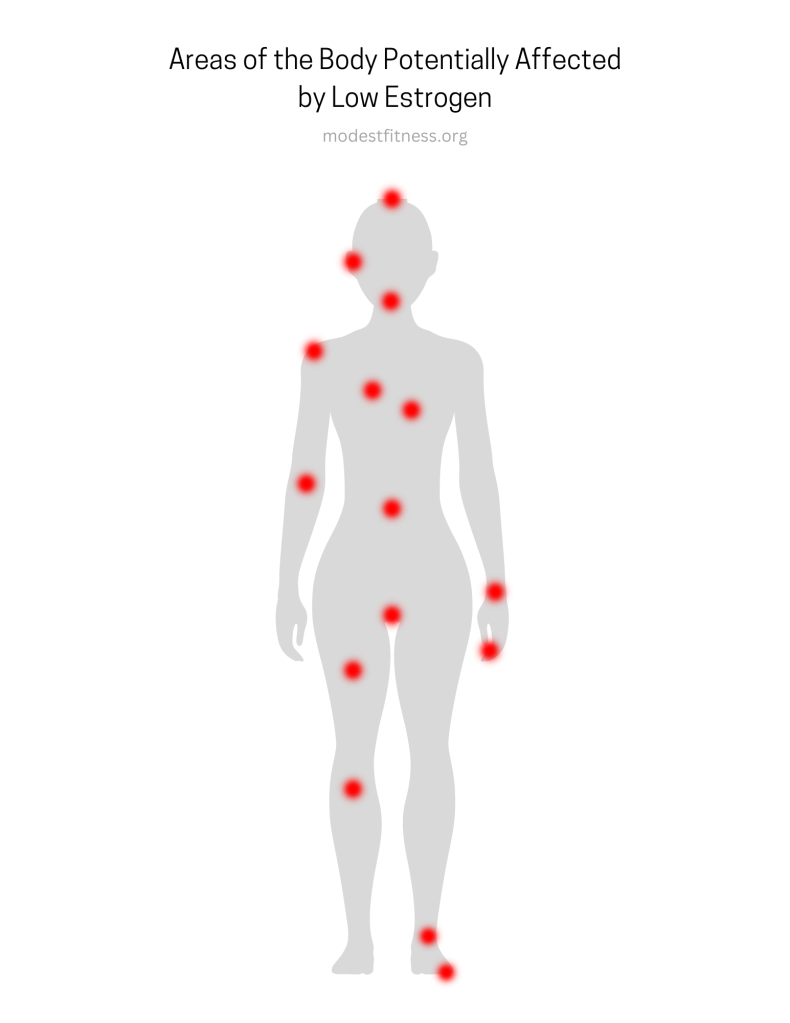
The menopausal transition is fueled by a decrease in estrogen production. Sometimes this decrease happens earlier, faster and more drastically than the body can handle, leading to a myriad of symptoms. We have estrogen receptors everywhere in our body, so these symptoms can appear in every single organ system.
Symptoms Associated with Menopause and Perimenopause (Low Estrogen):
- Hot flashes
- Night sweats
- Menstrual cycle disruption (85% of women)
- Effects to their muscular skeletal system such as sudden pain in the muscular skeletal system without injury (80% of women)
- Sleep disturbances (90% of women)
- Increase in mental health disorders (sources report 4-8x)
- Cognitive changes: brain rewires, biggest change is lack of cognitive function (memory problems, problem solving, executing tasks)
- Vertigo (feeling like the room is spinning or that you are off balance)
- Tinnitus (ringing in ears)
- Unexplained heart palpitations
- Reduction in clitoris size and function
- Lack of vaginal lubrication and elasticity, painful intercourse
- Loss of orgasm
- Recurring UTIs
- Asthma that is resistant to typical asthma medications
- Changes to the gut – microbiome loses diversity, microbiome starts to resemble that of a man
- Skin and nail changes – becoming weaker and more brittle
- Losing hair on our head, growing hair in unwanted places like on the face
- Losing joint function, unexplained pain in the joints
- Increased risk for metabolic diseases/syndromes or unexplained worsening – obesity, diabetes, hypertension, cholesterol, cardiovascular disease etc.
- Increase of visceral fat – up to 3x increase in % of visceral fat in the body (belly fat that collects in the abdominal cavity around the internal organs)
- More likely to spend the last 10 years of their life in poorer health than men, despite having a longer life expectancy.
- More likely to need end of life assistance (nursing home etc.) and for a longer period of time due to decline in cognitive abilities, muscular system and motor skills.
WHY Does Menopause Even Occur?
We aren’t exactly sure. The most compelling theory is because it wouldn’t be safe for women to carry and birth children in their old age even if they maintained their estrogen production. We are one of only five known mammalian species who experience menopause.
However.. Even though it is normal and inevitable, it does not have to be miserable. You can also prolong its onset by practicing the right lifestyle habits.
Lifestyle habits and environmental factors have been shown to be the number one indicator of when a woman is likely to go through menopause and to what severity she is symptomatic through the menopausal transition. Some of these lifestyle habits are well within our control, like diet and exercise. Others are not as feasible to control, such as our exposure to endocrine disruptors. We are ALL at greater risk of hormone imbalance and dysfunction because of how drastically our lives have changed in the western world in the past 60-100 years due to the Industrial Revolution, World Wars, and pharmaceutical revolution.
Let’s look at the current lifestyle choices and environmental factors that are causing a rise in hormonal disorders, causing women to go into perimenopause at an earlier age and have more symptomatic menopausal transition and beyond… plus, what we can do about it in order to support our hormones, reduce our symptoms and improve our quality of life!
“People who eat at least 1.2–1.6 grams of protein for every kilogram of ideal body weight have less belly fat, more muscle, and lower fragility scores (based on functional strength measures—grip strength, getting up off the floor, etc.) than people who eat less.”
Dr. Mary Claire Haver, Menopause Specialist
What Leads to Hormonal Dysfunction and Low Estrogen?
1. Exposure to Endocrine Disruptors aka Xenoestrogens (Estrogenic Materials)
- Most plastics (Bisphenol A, phthalates)
- Shampoo, conditioners, soap and skincare (parabens, fragrances)
- Sunscreens (Benzophenone)
- Insecticides like Atrazine
- Pesticides
- Birth control pills (Ethinylestradiol)
- Household cleaners (Alkylphenol)
- Many dyes used in food – specifically red dyes
2. Lack of Proper Nutrient Intake
- Protein
- Fiber
- Vitamin D
- Vitamin A
- Vitamin K2
- Calcium
- Magnesium
- Vitamin C
- Iodine
- Potassium
- Zinc
- B Vitamins
- Iron
3. Lack of Exercise
4. Excess Body Fat
5. STRESS, high cortisol, lack of sleep/recovery
What Supports Hormones and Encourages Healthy Estrogen Levels?
1. Avoiding Xenoestrogens and Estrogenic Products as Much as Possible
- Swap plastic for glass, wood or stainless steel (tupperware, water bottles, cooking utensils)
- Cook on stainless steel or cast iron
- Swap to less toxic hygiene products (see the “Products” page for some xenoestrogen free care products.)
- Shopping organic
2. The Best Menopause Diet
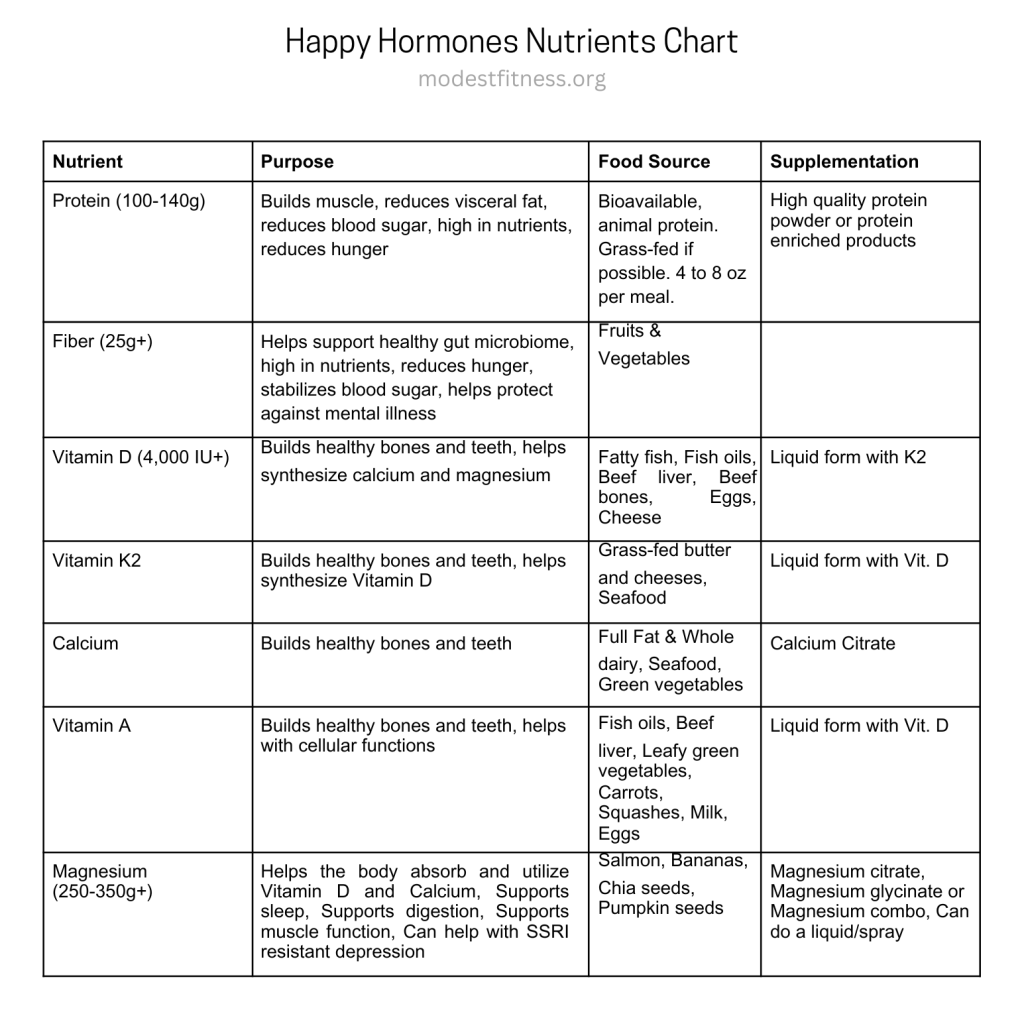
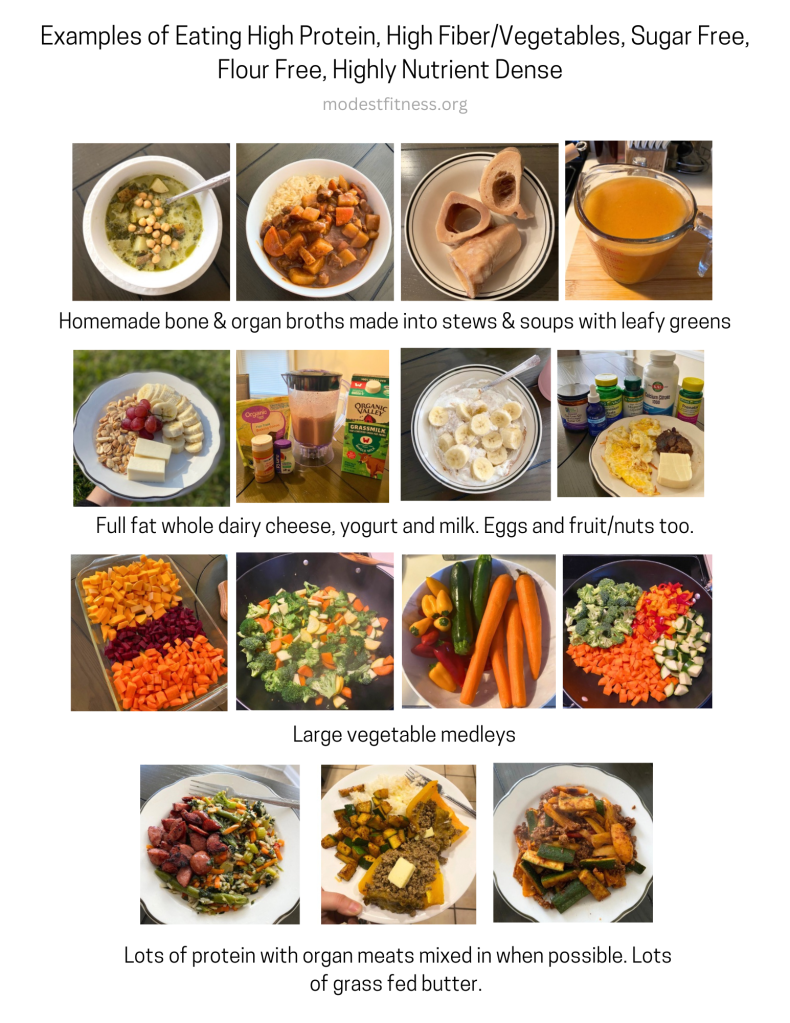
- High protein (bioavailable, animal protein. Grass-fed if possible) 100-140g per day (builds muscle, reduces visceral fat, reduces blood sugar, high in nutrients, reduces hunger)
- Low sugar, low flour, low processed carbs (lowers inflammation, helps support healthy gut microbiome, reduces cravings, stabilizes mood/helps prevent mental illness, prevents excess body fat)
- High fiber – lots of vegetables (helps support healthy gut microbiome, high in nutrients, reduces hunger, stabilizes blood sugar, helps protect against mental illness)
- High in Vitamin D, Vitamin A, Vitamin K2, Calcium, Magnesium, Vitamin C, Iodine, Potassium, Iron, Zinc, B Vitamins.
Remember: Supplements are good – but food is best!
“You can’t swallow a handful of supplements and make poor nutritional choices and think that you’re doing anything. Good food should be the core of what you do.”
Dr. Mary Claire Haver, Menopause Specialist
3. Exercise – Weight Lifting/Resistance Training
- Start out with a simple resistance training plan that targets all of the major muscle groups (see following pages) and continue to progress to higher weights and intensities
- Nothing replaces weight lifting when it comes to preventing osteoporosis and maintaining strong bones
- The more lean muscle you gain the higher your metabolism
- God given antidepressant
- If you are not familiar with how to do certain exercises watching videos of someone else performing them correctly will train your mirror neurons to become more familiar with the movements
- Start slow and prevent injuries
(For a more in-depth breakdown visit the “Exercise” page.)
4. Heal Your Gut
- Maximizes nutrient absorption
- Reduces inflammation
- Bone and organ broths
- Fasting
5. Intermittent Fasting
- Can help with every aspect of metabolic health, such as aiding in weight loss, lowering high blood pressure, improving insulin resistance, lowering bad cholesterol, and reducing total inflammation in the body. It also repairs our gut microbiome, improves neurodegenerative diseases (like dementia and Alzheimers), strengthens the immune system, and increases neurotransmitters like dopamine, serotonin, and GABA. Additionally, it even generates DNA repair, heals the nervous system, repairs the hypothalamus and helps to regulate our hunger hormones, therefore also helping to combat obesity and overeating.
- Men and women fast differently
- Cellular repair (autophagy & apoptosis): 8-17 hours
- Gut healing: After 24 hours
- Deep fat burning: After 36 hours
(For a more in-depth breakdown visit the “Fasting” page.)
6. SLEEP & REDUCE STRESS
A Note on Healing…
Our body is like a conveyor belt. When we are sick the conveyor belt has been overloaded. We must go through a period of healing where we very intentionally reduce the load on the conveyor belt. Once we are in a healthier place, aka the conveyor belt has had a chance to catch up, we can enter into a maintenance period. During the maintenance period we often do not have to be as strict as in the healing period, but we still want to be mindful to not let our conveyor belt be overloaded again.
Example of a Basic Workout Plan
Complete each exercise for 30 seconds to one minute, resting for 2-3 minutes between rounds. Repeat 3 to 4 times.
Bodyweight squat
Bodyweight push up (can be assisted)
Bodyweight walking lunges (alternating)
Bodyweight overhead press with dumbbells
Bodyweight step ups to short box or surface (alternating each leg)
Each week increase the challenge by aiming for more reps, longer time, or more weight.
 Modest Fitness