“Your body is a nearly perfect machine. It’s made up of more than 30 trillion cells that act like a unified team, working hard to make sure you thrive.”
Dr. Mindy Pelz
Exercise is essential for every human on earth, no matter their age or physical ability. While it will almost certainly look different, this applies to everyone from the toddler to the senior citizen!
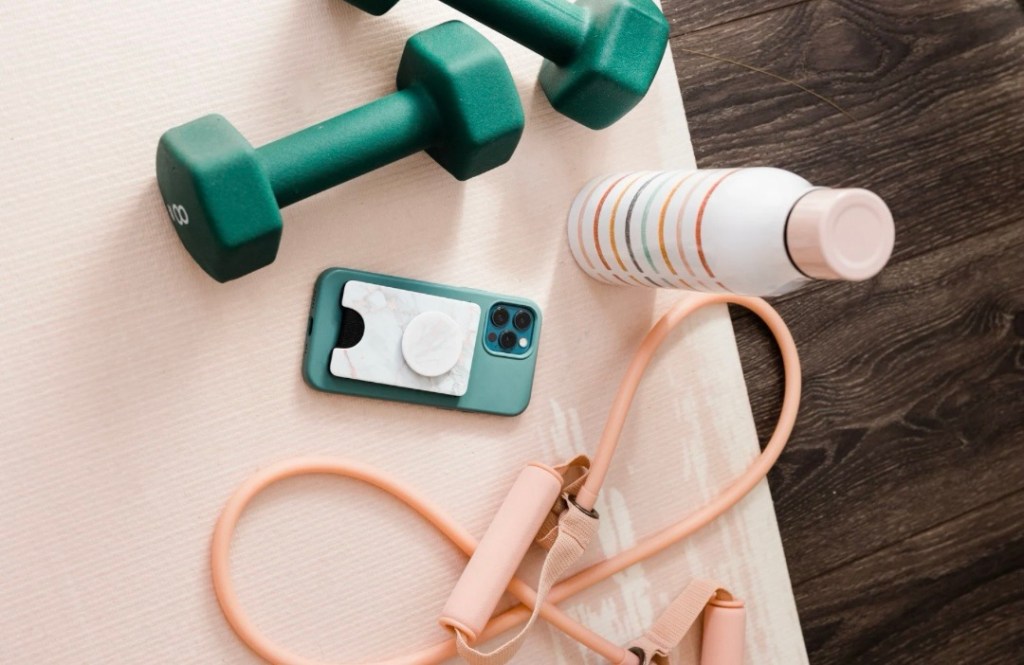
Regular movement that elevates our heart rate, increases blood circulation, strengthens our lungs, and engages all of our muscles cannot be ignored or replaced. A lack of exercise is linked to a plethora of diseases and disabilities, many of which are discussed on our “Motivation” page.
Unfortunately, only a small fraction of the population gets enough exercise each week to achieve and maintain optimal health. Traditionally, our need for challenging physical activity was met largely just by the demands of daily life. More laborious jobs and tasks were needed in order to provide enough food and natural resources for a household. Today, most of these processes and tasks have been replaced by industry, machines and a vastly different way of living. Most jobs and household tasks now require much less physical labor.
Thus, we need to be much more intentional about getting enough exercise, and it often has to be added into our schedule as its own task and responsibility. It is still more than worth it to make time and space in your calendar to do so, as your physical health, mental health and the health of your family will surely benefit.
Types of Exercise
While there are endless ways to exercise, there are basically two kinds of exercise, cardio and resistance training.
Cardio is any exercise or sport that focuses on primarily elevating the heart rate and increasing cardiovascular fitness. These exercise types typically involve repetitive movements for speed or distance. Some examples would be running, jogging, cycling, jumping rope, or swimming.
Resistance training is any form of exercise or sport that focuses on challenging the muscles by placing resistance on them that they need to overcome. This resistance can be our own body weight, additional gym weights like dumbbells or barbells, or the resistance of another object in a sport.
Most workout plans and sports are a combination of cardio and resistance training. Your workout plan will also involve both kinds of exercise. You will see cardio is a great way to begin a workout, end a workout, and to add in a supplementary amount of calorie burn and conditioning. Resistance training is excellent for challenging your muscles and subsequently building lean muscle mass, which will help you get “toned”. Both forms of exercise can greatly aid in achieving and maintaining weight loss.
Gym Workouts vs. Home Workouts
You can maintain a consistent, effective exercise program and hit your fitness goals whether you choose to workout at home or in a commercial gym. Both ways offer their own benefits and drawbacks.
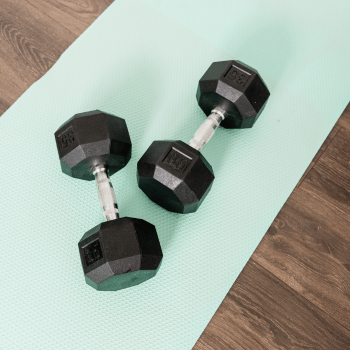
Working out at home allows you more flexibility for privacy, more flexibility for time restraints, and of course, you don’t have the added financial commitment of a gym membership payment. You will also likely have less access to equipment that will make it easier to increase the challenge and effectiveness of your workouts as you progress. You can, however, purchase dumbbells and other free weights to use at home, and I do recommend doing so after your first month of exercise if at all possible.
Working out in a gym will offer you a much larger variety of equipment, and for many people, the gym environment can be more motivating and make it easier to focus on getting a great workout. There tends to be less distractions than when at home where you can easily step away to do household chores or deal with your kids. Either way, it will be up to you to decide where you’d like to work out. Some people enjoy a combination of both home and gym workouts.
The Benefits of Following Structured Workouts
Oftentimes, people initially approach exercise with the same ambivalence they approach their eating. They tend to just do random exercises and either always repeat the exact same thing or do something completely different each time. This is not optimal for a set weight loss or fitness goal.
The most effective workout plan is one that is intentional, methodical and progressive. It needs to be designed to target the major muscle groups, benefit both your strength and cardiovascular conditioning, and challenge you more as time goes on.
This doesn’t mean you cannot find great, effective workouts somewhere like Youtube, or that you can’t create your own effective workouts. You just want to avoid workouts without any structure or intensity if you are looking for real results. A structured workout may look like a workout designed by a personal trainer to target a certain muscle group, a “30 minute full body workout”, or an intentional 15-30 minute cardio session. On the contrary, an ineffective workout may look like wandering around the gym completing a few repetitions of various machines before moving onto the next one without any real intensity or purpose.

Preventing Injuries and Strains
There is always a risk of injury when engaging in any kind of exercise, or any kind of physical activity, for that matter. However, with proper technique and the right approach, you can greatly reduce your risk of injury or strain. There are a few main ways people increase their likelihood of injuries, so you’ll want to keep them in mind and do your best to avoid them.
Warming Up Properly
Warmups allow your muscles to start receiving a steady supply of blood and loosen up before starting the main, more intense portion of the workout. Exerting muscles when they are cold makes them much more susceptible to injury. By the time you start your main workout, you should feel your blood pumping and muscles waking up and you may have even broken a sweat already.
Using Correct Form
It’s equally important to make sure you are performing the moves correctly and using the right muscles to power them as it is to keep up the intensity in your workouts. Keep in mind what muscles you are working and imagine activating those muscles throughout each exercise. Also be sure to follow any needed form cues like keeping an engaged core to stabilize your back, keeping a straight but neutral spine and neck, whether your knees or elbows are supposed to be at a 90 degree angle etc. The form will come more naturally, and you will be stronger at it, the more you exercise.
Ensuring Proper Recovery
During a workout you are breaking down your muscles, but they are rebuilt stronger and leaner during your recovery. This is why it’s vital to make sure you are letting your muscles heal between workouts. If any muscles become too strained, you may develop a nagging injury. You can avoid this by following the previous bullet points, allowing your muscles enough down time to recover between bouts of intense physical activity, and ensuring you have proper nutrition, sleep and water intake.
Exercising in a Skirt
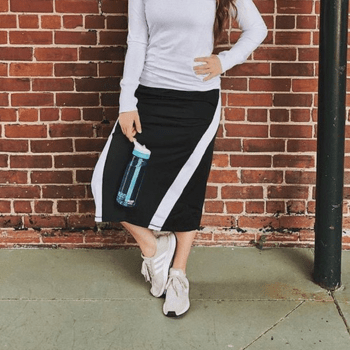
Yes, it is more than possible to workout in a skirt without compromising your modest. It may take a few tweaks to a workout plan to ensure your workout is skirt-friendly, but it is more than possible! I have found different skirt materials to offer varied benefits depending on the type of exercise I am doing. For instance, skirts made of looser but heavier material tend to be the best for cardio, as the added weight keeps the skirt hem from blooming up with movement, while allowing adequate room for movement. Lighter, stretchy materials tend to be my favorite for resistance training. Check out my current favorite (affordable) workout skirt here on our products page.
 Modest Fitness